The types of drywall finishes are six standard levels, numbered 0 to 5 in the Gypsum Association's GA-214 standard, plus textures such as orange peel and knockdown. Level 4 is the standard for flat or eggshell paint, and Level 5 adds a full skim coat for gloss paint and strong side light. The six options:
- Levels 0 to 2: bare board, taped joints and a thin coat, for hidden or utility areas.
- Level 3: ready for a medium or heavy texture.
- Level 4: the standard for flat or eggshell paint.
- Level 5: a full skim coat for gloss paint and strong side light.
- Orange peel: a fine, even spatter texture.
- Knockdown: a heavier spatter flattened with a trowel.
Cost: Angi's 2026 data puts skim coating at about $600 per project nationally, or $1.10 to $1.30 per square foot.
The types of drywall finishes are a set of standard levels, not a matter of taste. The Gypsum Association's GA-214 standard defines levels 0 to 5, and each one describes how many coats of joint compound go over the joints and fasteners. Knowing the types of drywall finishes matters because the same wall can look perfect under flat paint and lumpy under a glossy one.
This guide walks through the types of drywall finishes one by one, from Level 0 to Level 5 plus orange peel and knockdown texture, with a typical use and a cost note for each. It also covers the cost to skim coat walls, drywall texture repair, drywall crack repair and drywall installation in Charlotte. Matching the types of drywall finishes to the paint and the light in each room is what keeps a wall looking good. It is different from our guide on when to repair drywall vs replace it, which covers damage, and our popcorn ceiling guide, which covers ceilings.
Finished drywall and painting projects by Friends Enterprises
Here is what the finishing steps look like in real rooms: board hung and finished, a repair ready for its final coats, and painted walls with clean lines.
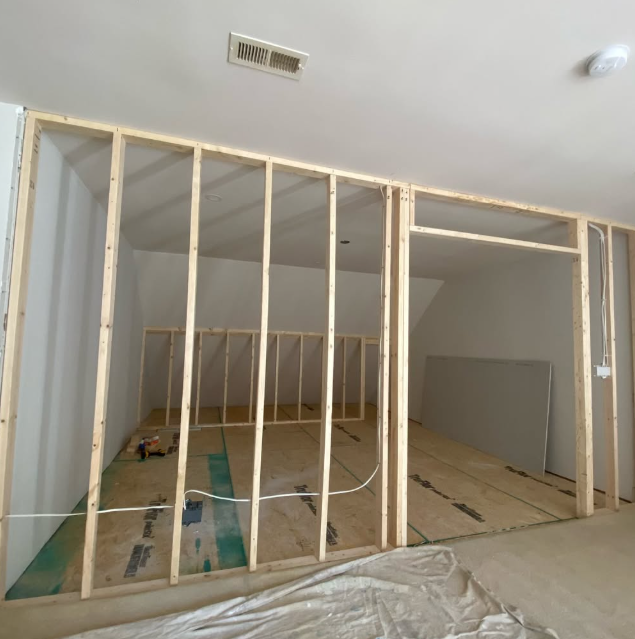
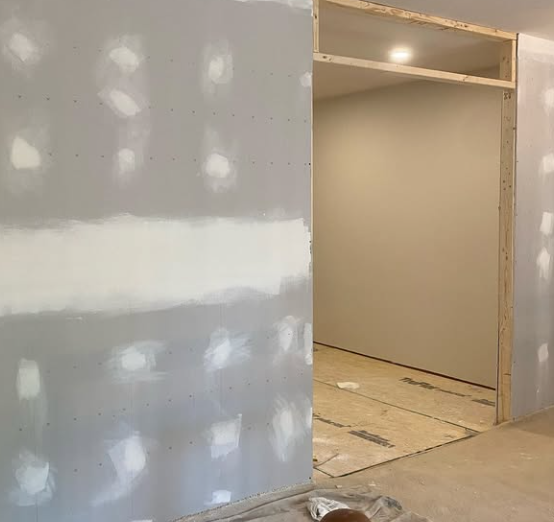
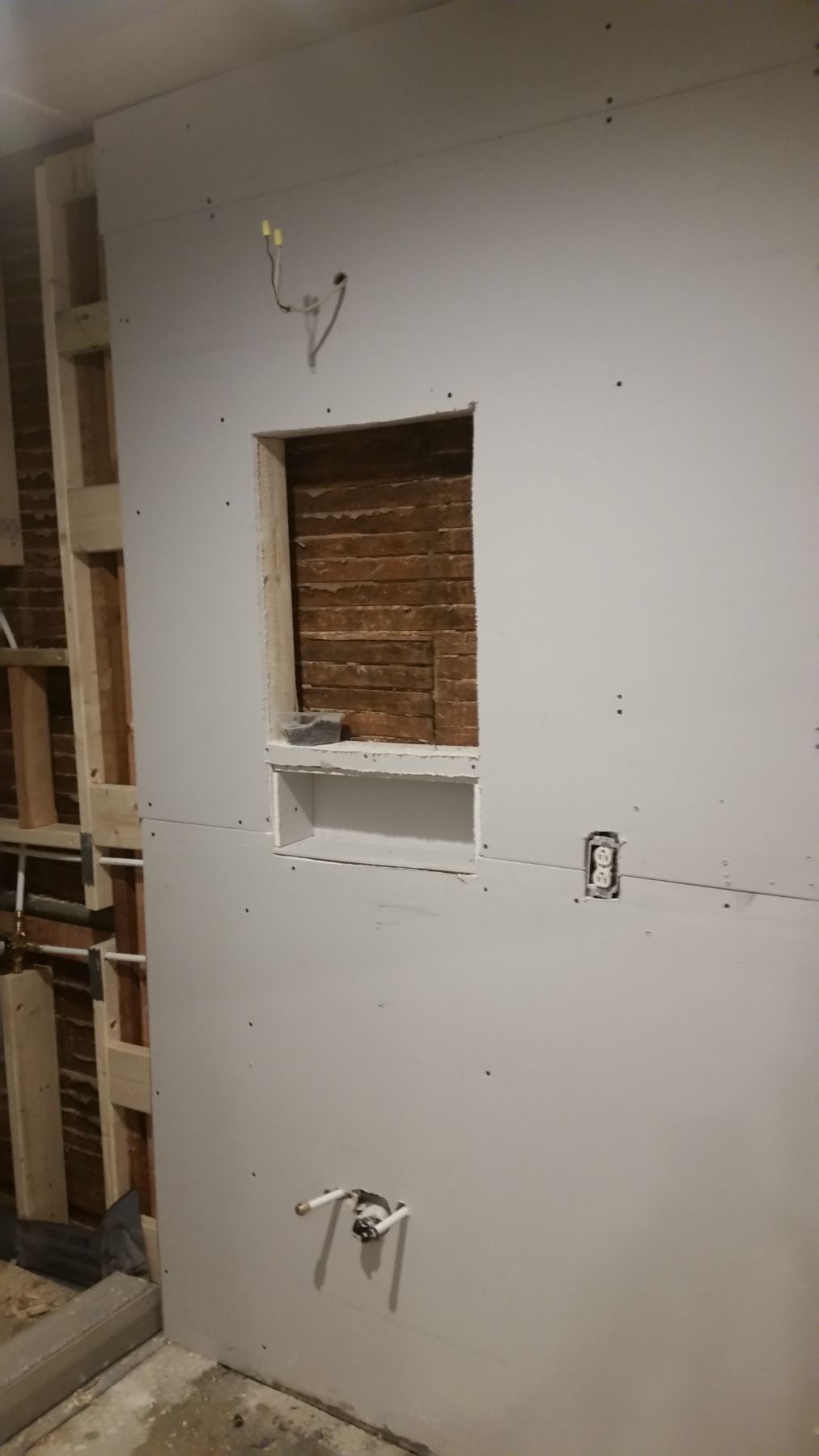
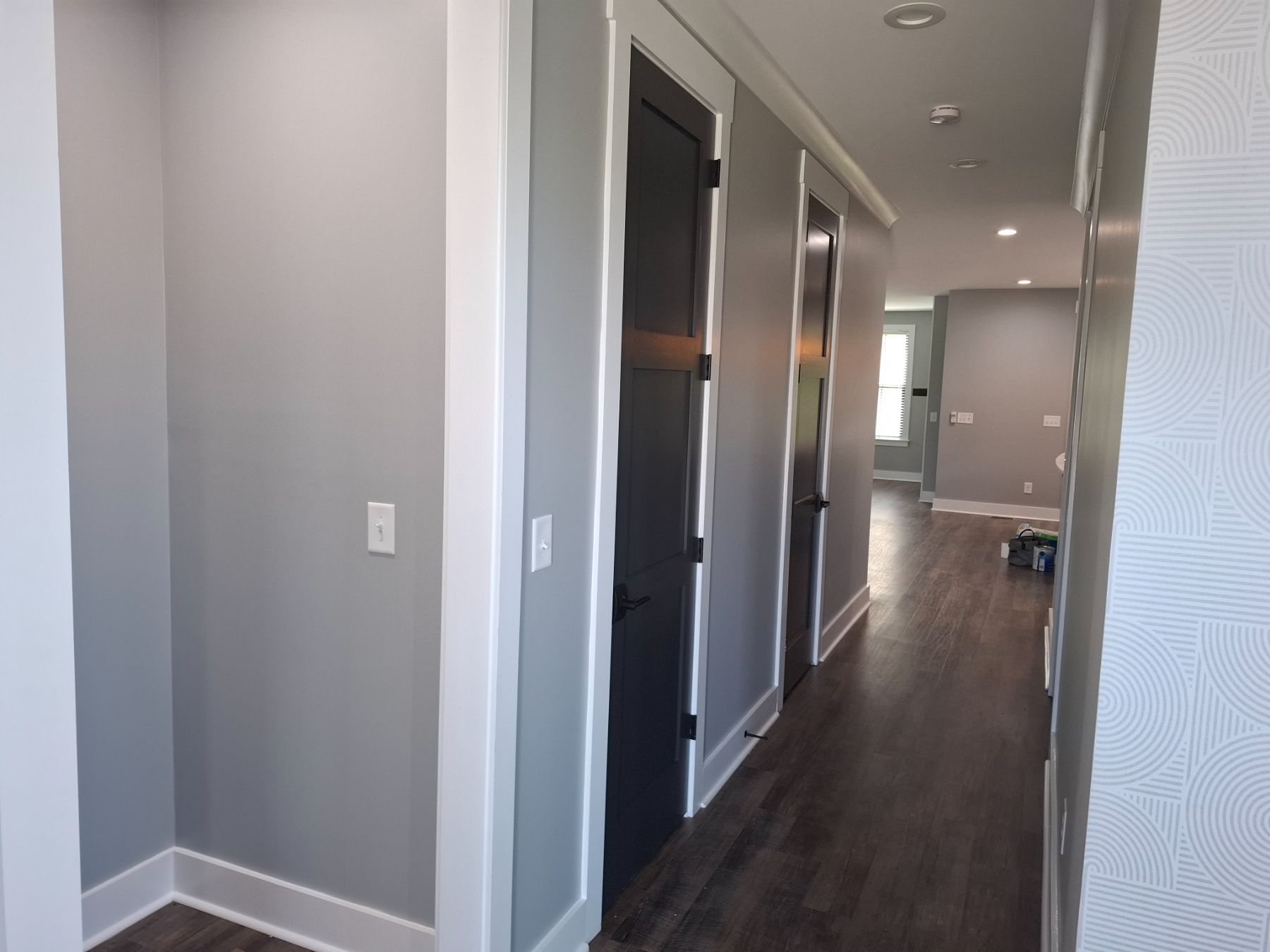
Levels 0 to 2: the lowest of the types of drywall finishes
Levels 0 to 2 are the lowest of the types of drywall finishes. Level 0 is bare board, Level 1 embeds tape in compound at the joints, and Level 2 adds a thin coat over the joints and a coat over the fasteners. They suit areas where appearance does not matter, such as garages, storage and tile backing.
Level 1 is typical in hidden areas such as above ceilings. Level 2 suits garages, storage rooms and walls that will be covered with tile, because tile needs a flat, solid surface rather than a smooth one. These are the least expensive finishes.
Level 3: ready for a medium or heavy texture
Level 3 adds one more coat of compound over the joints and angles, with two coats over the fasteners, but it is not smooth enough for flat paint. It is meant to be covered by a medium or heavy texture, or heavy-duty wallcoverings, which hide the joints. It costs less than Level 4 because it needs fewer coats.
GA-214 says gloss, dark or deep-tone paints are not recommended over a Level 3 finish, because without texture the joints would show.
Level 4: the standard among types of drywall finishes for most walls
Level 4 puts two coats of compound over flat joints, one over interior angles and three over fasteners, sanded smooth. It is the standard residential finish for flat and eggshell paint and light textures. It is not recommended for gloss paint or strong side lighting, where joints and fasteners can show through.
This is the finish most painted living spaces get. If your room has large windows or recessed lights that throw light across the wall, step up to Level 5. National Gypsum’s guide to the finish levels summarizes each level.
Level 5: a full skim coat for gloss paint and critical lighting
Level 5 is Level 4 plus a thin skim coat over the entire wall, not just the joints. GA-214 recommends it for gloss, semi-gloss and enamel paint, dark or deep tones, and critical lighting from strong side light, because it minimizes joints and fasteners showing through. It is the most expensive of the types of drywall finishes.
Because the skim coat covers the whole surface, it takes extra labor. The cost section below shows what skim coating runs per square foot.
Orange peel texture: a fine, even spatter
Orange peel is a fine, even spatter texture, like the skin of an orange, sprayed over a finished wall. It hides small flaws and is easy to paint and clean. Angi puts drywall texturing at about $0.80 to $2.00 per square foot nationally, and matching an existing orange peel pattern takes practice because spatter size and mix thickness both matter.
Orange peel is easier to repair than a smooth Level 5 wall, but the patch still has to match the surrounding texture to disappear.
Knockdown texture: a heavier spatter, flattened with a trowel
Knockdown is a heavier spatter that is flattened with a trowel shortly after it is sprayed, giving a subtle, stucco-like look with flat spots and raised edges. It hides more flaws than orange peel and is a common choice after popcorn ceiling removal. Texturing is typically about $0.80 to $2.00 per square foot nationally.
Knockdown vs orange peel is a common decision after removing popcorn texture. Knockdown looks more handmade and hides more, while orange peel is finer. Our popcorn ceiling removal service covers removal, skim coating and the new finish together.
Types of drywall finishes at a glance
There are six levels of drywall finish, numbered 0 to 5 in the Gypsum Association's GA-214 standard, plus textures such as orange peel and knockdown. Level 4 is the standard for flat or eggshell paint, Level 3 is for heavy texture, and Level 5 adds a full skim coat for gloss paint and critical lighting.
| Finish | What is applied | Typical use | Cost note |
|---|---|---|---|
| Level 0 | No taping or finishing | Temporary work | Lowest cost |
| Level 1 | Tape embedded in compound at joints | Hidden areas, above ceilings | Very low |
| Level 2 | Thin coat over joints, one coat on fasteners | Garages, storage, tile backing | Low |
| Level 3 | One extra coat over joints, two over fasteners | Walls getting a medium or heavy texture | Less than Level 4 |
| Level 4 | Two coats over flat joints, three over fasteners, sanded smooth | Flat or eggshell paint, light textures | Standard cost |
| Level 5 | Level 4 plus a skim coat over the whole wall | Gloss paint, dark colors, critical lighting | Highest |
| Orange peel | Fine, even spatter sprayed on | Hides small flaws, easy to clean | About $0.80 to $2.00 per sq ft |
| Knockdown | Heavier spatter flattened with a trowel | Hides more flaws, common after popcorn | About $0.80 to $2.00 per sq ft |
Cost to skim coat walls: what drywall finishing costs
Angi's 2026 data puts the national average to skim coat walls at about $600 per project, with most work priced at $1.10 to $1.30 per square foot. Smoothing or covering existing texture costs more, about $1 to $3 per square foot, and applying new texture runs about $0.80 to $2.00 per square foot.
These are national figures from Angi's skim coating and texturing guides and HomeGuide. By room, Angi lists about $400 to $600 for a 9 by 11 foot room and $500 to $700 for a 12 by 14 foot room. Walls with damage, wallpaper residue or texture to smooth cost more, and Charlotte quotes vary, so get a written quote.
Skim coating is also the fix after wallpaper removal damages the paper face, and after texture or popcorn removal. Our texture and wallpaper removal service includes skim coating as part of the job.
Drywall texture repair in Charlotte NC: matching the pattern
Drywall texture repair is often harder than the patch itself, because the new texture has to match the old to disappear. Angi lists retexturing a repaired area at about $1 per square foot. A crew that does it regularly tests the mix on scrap board, matches the spatter size and pattern, and feathers it into the surrounding wall.
Matching gets harder with uncommon patterns, which is why it is worth asking whether the crew will test a sample first.
Drywall crack repair in Charlotte NC: fix the cause first
Drywall crack repair usually means cutting out loose compound, retaping the joint and finishing it to match. Angi lists crack repair from about $60 for a hairline crack to over $400 for large cracks and corner repairs. Cracks that keep coming back can point to movement in the framing, which should be checked before repair.
Our drywall repair service covers cracks, patches and texture matching, and our interior painting crew finishes the job. Angi's drywall repair cost guide has the national ranges. In homes built before 1978, sanding painted surfaces can raise lead dust, which the EPA’s lead-safe renovation guidance explains. If you are in east Charlotte, see our east Charlotte painting and drywall repair page.
Drywall installation in Charlotte: ask which finish level is in the quote
Drywall installation is quoted by finish level as well as square footage, so ask which of the types of drywall finishes the price includes. HomeGuide puts taping, mudding and finishing at about $1.50 to $3.50 per square foot nationally, and Level 4 is the usual choice for painted living spaces.
Putting the level in writing, along with the paint sheen you plan to use, avoids a wall that shows joints under your lighting.
Interesting facts about the types of drywall finishes
See finished work, or get a quote
See finished interiors on our work page, or get a free quote for drywall finishing, repair and painting in one visit.