Expand key insights ▾
- Small holes, dents, and nail pops usually get repaired.
- Soft, swollen, or moldy drywall is replacement territory.
- Repeated patches in one spot often mean it's time to start over.
- A paintable repair saves money when the wall is still sound.
- Knowing how to tell if drywall has water damage early can stop a small patch job from turning into a full wall replacement.
- Friends Enterprises offers drywall repair Charlotte NC homeowners can pair with repainting and other finish work.
Table of Contents
- When should you repair drywall instead of replacing it?
- How to tell if drywall has water damage
- What damage means replacement is the safer choice?
- Can you put new drywall over old drywall?
- What does the average drywall lifespan tell you?
- How much does drywall replacement usually cost, and what changes the price?
- Can you tell if drywall is beyond repair before you start painting?
- What should you do if the damage keeps coming back in the same spot?
- How should you decide before you paint the room?
- Where to get drywall repair in Charlotte, NC
- Frequently Asked Questions
If you are trying to figure out when to repair drywall vs. replace it, the short answer is this: repair it when the damage is local and the sheet is still solid, and replace it when the drywall has lost strength, has repeated damage, or has been affected by water. Small dents, nail pops, and isolated holes are usually repair jobs. Soft spots, crumbling edges, stains that keep returning, and visible mold are signs the wall may need to come out.
This question comes up constantly for drywall repair Charlotte NC homeowners request, whether it's one dinged wall in a hallway or part of a bigger home renovation Charlotte NC plan that touches several rooms at once. The tricky part is that a wall can look minor from across the room and still be failing underneath. That is why the best decision is based on the condition of the sheet, not just the size of the flaw.
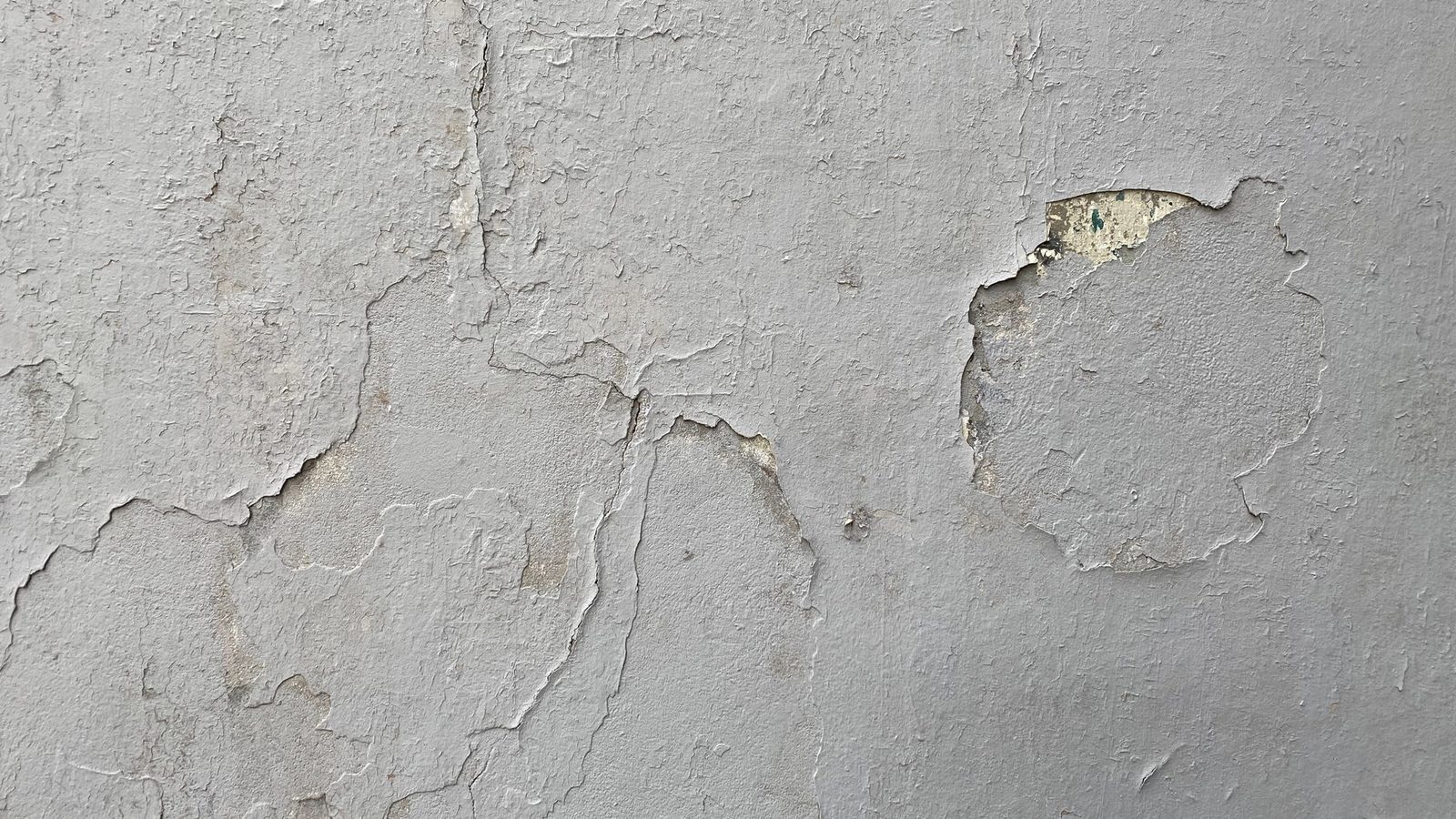
Detailed texture of a weathered wall with peeling paint and cracks, perfect for backgrounds. Photo: Krakograff Textures / Pexels
When should you repair drywall instead of replacing it?
Repair is usually the right call when the drywall is still firm and the problem stays in one spot. That includes small holes, dents, nail pops, hairline cracks from settling, and scuffs from moving furniture or door handles. If the surrounding surface is sound, a patch, tape, mud, sanding, and paint can make the wall usable again without the cost of tearing out a whole section.
Think of repair as the smart option when the damage is cosmetic or limited, not structural. If the sheet still feels solid and dry, there is no reason to replace good material just because one area got hit.
That said, repair only works if the finish around it can blend cleanly. If the wall already has many old patches or heavy texture differences, the fix may hold up but still look mismatched.
Common drywall issues that usually stay in repair range
- Small nail pops
- Minor dents and dings
- Isolated screw holes
- Short settling cracks
- One-off surface scuffs
| Damage | Best move | Why |
|---|---|---|
| Small holes, dents, nail pops | Repair | Damage is local and the sheet is still solid. |
| Soft, swollen, crumbling drywall | Replace | The board has likely lost strength. |
| Repeated patches in one spot | Replace | Recurring failure suggests a deeper problem. |
| Water stains that keep returning | Replace | Moisture damage can hide mold and breakdown. |
| Flat, dry, firmly attached board | Repair | A patch, tape, mud, sanding, and paint can work. |
How to tell if drywall has water damage
Water damage changes the decision fast. If drywall feels soft, swollen, or crumbly, that sheet has likely lost strength. Staining can also be a warning, especially when the mark keeps growing, returns after paint, or sits below a known leak.
Moisture damage matters because drywall does not just look bad when it gets wet. It can sag, break down at the edges, and hide mold behind the paper face. Once that happens, patching the surface may hide the problem instead of fixing it.
If the leak is active or the drywall was soaked for a while, the better move is usually removal of the damaged area, leak repair, and replacement with fresh board. You want the wall dry before any finish work goes back on it.
Published repair guides from The Patch Boys and Trusscore both point to soft, crumbling, or moisture-hit drywall as replacement territory.
What damage means replacement is the safer choice?
Replacement makes sense when the wall is no longer reliable as a base for repair. Large holes, widespread cracking, sagging, repeated damage in the same spot, and water-affected drywall all point in that direction. If the board is warped, broken down, or missing too much material, a patch is only treating the surface.
Replacement is also the better answer when you want the repaired area to disappear into the wall around it. In a very visible spot, a full panel swap can be cleaner than trying to feather a patch across old damage and old texture.
There is a trade-off here. Replacement costs more and creates more dust, but it also gives you a fresh, stable surface for paint, trim, and the rest of the room finish.
For homeowners planning a larger refresh, it can help to pair drywall work with interior painting so the repair and the final finish match from the start.
Can you put new drywall over old drywall?
Sometimes, yes, but only when the old drywall is flat, dry, and still firmly attached. Overlaying new board can save tear-out time in some remodels, yet it also adds thickness to the wall and can affect outlets, trim, and door casings. That is why it is not the default answer.
If the old drywall is soft, moldy, sagging, or damaged by a leak, covering it is the wrong fix. The problem is still there. New board over bad board just hides the failure and makes future repairs harder.
If the wall is only cosmetically tired and the structure behind it is fine, an overlay may be worth discussing. But if the sheet is already breaking down, replacement by removal is the cleaner path.
For projects that move beyond one wall, Friends Enterprises also handles remodeling and home improvements, which can make a larger wall replacement fit into a broader home renovation Charlotte NC project instead of becoming a separate hassle.
What does the average drywall lifespan tell you?
Drywall can last for decades when it stays dry and protected. In most homes, the board itself outlasts the paint, the caulk, and a lot of the room finish around it. That is why age alone is not usually the reason to replace it.
What matters more is condition. A 20-year-old wall that is solid and dry may only need a patch, while a newer wall with a leak behind it may need full replacement. The drywall is not the problem until it starts losing strength, shape, or stability.
This is also why a paint refresh can be a good time to inspect problem areas. Cracks that keep returning, bubbled paint, and soft corners are easier to catch before the wall gets worse. If the room is headed for a repaint, it is worth fixing the substrate first.
How much does drywall replacement usually cost, and what changes the price?
Short answer: the cost to replace drywall depends mostly on how much wall or ceiling area needs work, how easy it is to access, and whether the job includes finishing and painting. A small patch can stay affordable, while full-room replacement adds labor, materials, cleanup, and repainting.
The biggest price swings usually come down to a short list of factors:
- The size of the damaged area
- Whether old material, insulation, or trim needs to come out first
- The finish level you want once installation is done
- Access to the wall or ceiling, especially in tight spaces or high ceilings
A smooth wall that disappears after paint takes more time than a basic utility finish, so factor that into any quote you compare.
If the damage is isolated, repair is often the cheaper path. If several sections are soft, cracked, moldy, or already patched multiple times, replacement can save money over repeated fixes. That is why the cheapest option today is not always the best value over the next few years.
It also helps to think about the rest of the room. If you are already planning to repaint, update trim, or remodel nearby surfaces, drywall replacement can fit into that bigger project more efficiently. A bundled home renovation Charlotte NC project, like the full unit renovation Friends Enterprises completed recently, often costs less than doing the same work across separate visits.
For a rough home-improvement benchmark, Home Depot notes that drywall repairs can range from simple patch work to larger fixes depending on the size and type of damage. That same logic applies when you are comparing repair versus replacement: the more extensive the damage, the more the job shifts toward full replacement.
If you want a practical next step, ask for two quotes. One should cover repair only, and one should cover replacement of the affected section. That side-by-side comparison makes the decision much easier.
Can you tell if drywall is beyond repair before you start painting?
Yes. The easiest time to judge drywall is before paint goes on, because paint can hide problems for a while but not fix them. If the wall still shows movement, soft spots, cracks that keep returning, or visible staining, the surface may need more than a simple patch.
A good rule is this: if the wall feels solid, stays flat, and the damage is small and dry, repair is usually enough. If it feels weak, spongy, or crumbly when you press it, replacement is often the safer choice. You should also pay attention to the edges of the damage. Clean edges and a stable board usually point to repair. Broken, swollen, or deteriorated edges point toward removal.
Another clue is whether the problem is local or widespread. One dent from furniture is not the same as multiple seams opening up across a room. A few nail pops or hairline cracks can often be handled during prep. Widespread cracking can mean the board is moving, which paint will not solve.
This is also the stage where many homeowners get stuck on whether they should cover the old layer with a new one. In some cases that is possible, but it is not the best answer if the original board is damaged or the wall already has moisture history. The surface underneath still matters.
If you are still unsure, a professional can inspect the wall and tell you whether prep, repair, or replacement will hold up once the room is painted. That matters because once fresh paint is on, any missed flaw becomes much more noticeable.
For homeowners in Charlotte who want the work handled start to finish, Friends Enterprises can help with the drywall fix and the paint that follows, so you get a finished room instead of another project on your list.
What should you do if the damage keeps coming back in the same spot?
If the same spot keeps cracking, denting, or bubbling, treat that as a sign that the surface problem is not the real problem. Repeated damage usually means there is movement, moisture, impact, or a framing issue underneath. In that case, patching the visible flaw again may only buy you a little time.
The first question is whether the cause is gone. For example, if a leak was repaired but the drywall was never fully dried or removed, the wall may continue to fail. If a doorway corner gets hit all the time, a stronger corner detail or protective trim may be smarter than another cosmetic fix.
Another clue is the repair history. One earlier patch is normal. Several layers of compound over the same area, especially if the crack keeps reappearing, suggest that the board is not stable. At that point, replacement can be more efficient than another round of sanding and repainting.
It is also worth checking nearby areas. Sometimes the visible damage is only part of a larger issue, such as loose tape at a seam, movement in the ceiling, or failing drywall on both sides of a wall. Fixing just the front face may leave the underlying cause untouched.
Homeowners often ask whether the average lifespan of drywall should decide the issue. Lifespan matters, but condition matters more. Drywall can last for decades when it stays dry and stable. A newer wall with repeated damage may need replacement sooner than an older wall that is still performing well.
If you have a spot that keeps failing, the best move is to stop guessing and have it assessed in context with the rest of the room. That is where a full repair plan can save time, reduce repeat work, and leave you with a surface that is actually ready for paint.
How should you decide before you paint the room?
Use one simple test: if the wall can be repaired and painted without the flaw returning, repair it. If the wall is likely to keep moving, staining, or breaking down, replace it before any finish coat goes on. Paint cannot hide a weak substrate for long.
This is where good judgment saves money. A cheap patch on a wall that later needs replacement means you pay twice. A full replacement on a wall that only needed a small repair means you spent too much up front.
When the decision is unclear, a contractor can check the drywall’s firmness, look for moisture history, and decide whether the finish will hold. That is often the fastest way to avoid a cosmetic fix that fails a few months later.
Need the wall repaired and repainted by one crew? Friends Enterprises can handle the drywall fix, prep, and paint so you do not have to coordinate two different jobs. Request a quote when you want the repair decision to turn into finished work.
Where to get drywall repair in Charlotte, NC
Once you have narrowed the decision down to repair, the next question is who does the work. Friends Enterprises provides drywall repair Charlotte NC homeowners can schedule alongside interior painting, carpentry, and other finish work, so the wall gets fixed and matched in one visit instead of two.
A typical visit like this can include:
- Patch, tape, mud, sand, and a paint-ready finish for isolated damage
- Full panel replacement for water-damaged or structurally weak walls
- Texture matching so the repair disappears into the rest of the wall
- Interior painting to finish the wall once the patch or panel is ready
Homeowners planning something bigger, such as a kitchen remodel or a full-room refresh, can fold drywall work into that larger home renovation Charlotte NC scope instead of scheduling it as a separate job. The kitchen remodeling guide and the general contractor overview both walk through how that pairing usually works, and the full services list covers everything else that might come up along the way.
For a related decision on another common surface question, see the guide on whether it's cheaper to paint or replace kitchen cabinets. The same repair-versus-replace logic applies there too.