Expand key insights ▾
- To remove wallpaper without damaging walls: pull a loose corner first, score the surface, soak it with warm water and a little dish soap or a wallpaper remover, wait 10 to 15 minutes, then peel slowly at a low angle and wash off the leftover glue.
- The damage almost never comes from the paper. It comes from rushing the glue removal and gouging the drywall face with a stiff putty knife.
- Strippable and pre-pasted papers usually come off dry or with warm water. Traditional and painted-over papers need scoring and soaking, and sometimes a steamer.
- Charlotte's summer humidity slows drying, so give soaked walls extra time and keep a fan going once the paper is off.
- Torn drywall paper, plaster in older brick homes, or three layers of stubborn glue are the point to stop and get a free quote instead of making the repair bigger.
- The safe way to remove wallpaper without damaging walls, step by step
- Match the method to your wallpaper and wall type
- Removing old wallpaper glue without gouging the drywall
- When a wallpaper steamer helps, and when it hurts
- Dealing with painted-over wallpaper
- Protecting your drywall in Charlotte's climate
- DIY or hire it out: an honest comparison
- When to call a pro
- Frequently asked questions
How to remove wallpaper without damaging walls comes down to one rule: never rush the glue. Score the paper, soak it until the paste actually softens, then peel at a low angle instead of forcing a stiff, narrow blade under dry paper. That is the whole method behind how to remove wallpaper without damaging walls, whether you're stripping one accent wall or a paper that's been up since the Reagan administration. Get this part right and how to remove wallpaper without damaging walls stops being a gamble and starts being a checklist.
This guide walks through how to remove wallpaper without damaging walls step by step, covers what's the best way to remove old wallpaper without damaging drywall depending on your wall type, and gets into removing old wallpaper glue Charlotte NC humidity makes trickier than you'd expect. We'll also touch on the wallpaper vs paint cost comparison homeowners ask about once the old paper is off, and a few wallpaper design ideas Charlotte NC homeowners are choosing once the room is paint-ready. If you'd rather have a crew handle the whole strip-to-finish job, our wallpaper installation and removal page covers that option.

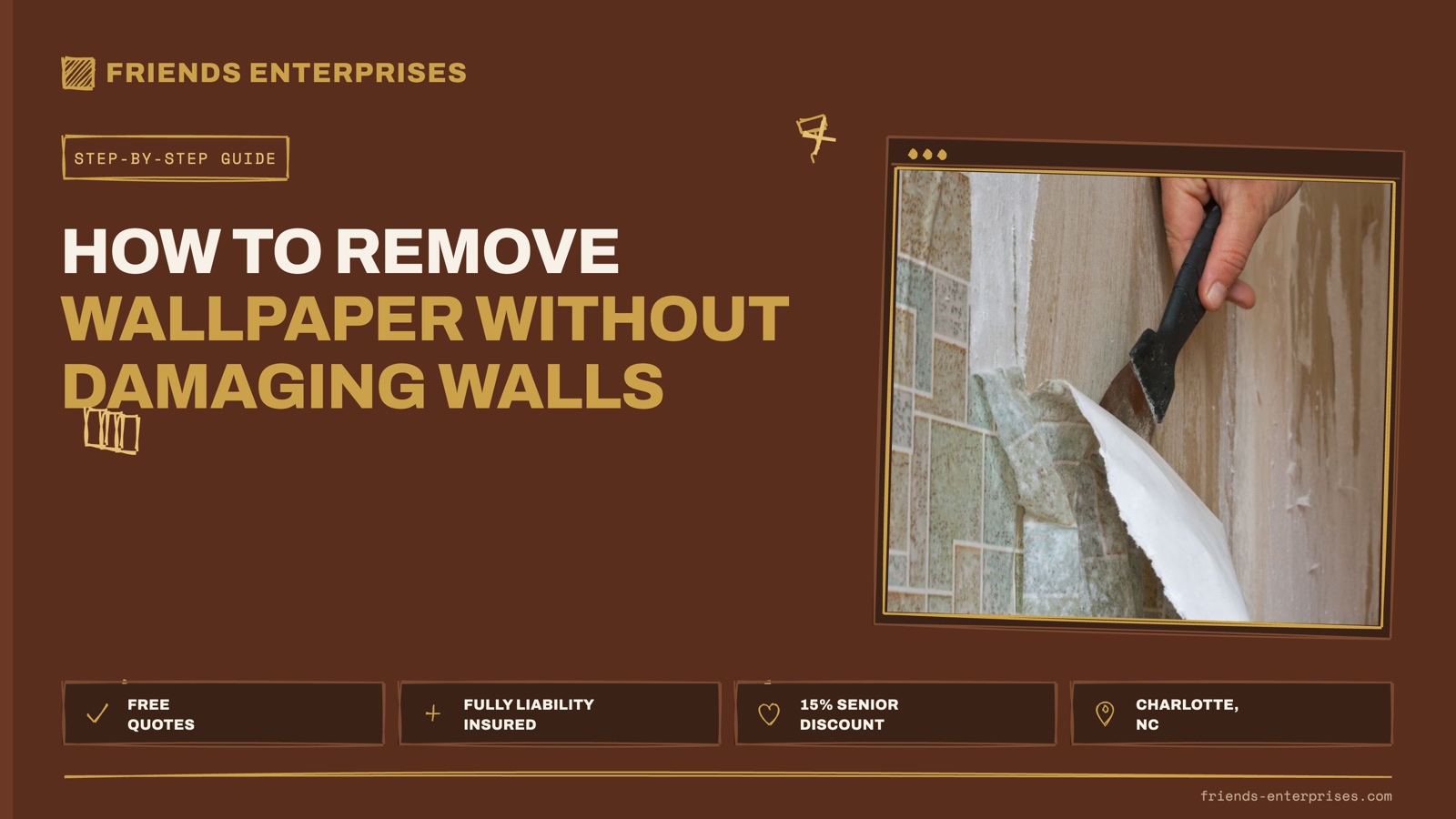
Learning how to remove wallpaper without damaging walls paid off on this Charlotte project, completed by Friends Enterprises.
The safe way to remove wallpaper without damaging walls, step by step
Here is the method we use on real jobs, scaled down for a homeowner with a bucket and a free Saturday.
1. Prep the room
Clear the wall, drop plastic sheeting along the baseboard, and cover outlets with painter's tape after you shut off the breaker for that room. Wet walls and live outlets do not mix. Lay old towels at the base to catch runoff.
2. Find a loose edge and test-pull
Use a putty knife to lift a bottom corner. Pull it back slowly at a low angle, almost parallel to the wall. If a big sheet comes away clean, you likely have strippable paper and the job just got easy. If it tears into confetti, you have traditional or painted-over paper and you will need to score and soak.
3. Score the surface
Run a scoring tool (a small handheld wheel like a PaperTiger) in circles across the wall. Use light pressure. You want to perforate the paper so water can reach the glue, not cut trenches into the drywall.
4. Soak it
Mix warm water with a few tablespoons of liquid dish soap, or use a gel wallpaper remover. Apply generously with a garden sprayer or sponge, working in sections about three feet wide. Let it sit 10 to 15 minutes so the paste actually dissolves. Re-wet if the wall dries before you get to it, which happens fast in a dry, heated house in winter.
5. Peel, then scrape gently
Start at a seam and peel by hand. Where paper resists, slide a wide, flexible putty knife (a 4 to 6 inch drywall knife) under it at a shallow angle. Keep the blade low. If you are digging in, the paper is not wet enough. Soak again and wait.
6. Remove the glue
This is the step most people skip, and it is the one that decides whether your paint job looks good. More on it below.
Match the method to your wallpaper and wall type
What's the best way to remove old wallpaper without damaging drywall really depends on what's under the paper. Older homes off Providence Road or in Dilworth may have plaster instead of drywall, which is tougher and more forgiving of a scraper but can crack. Newer construction in Ballantyne or Huntersville is almost always drywall, which strips easily but scars easily too. Match your approach to what you actually have.
| Wallpaper / wall type | Best method | Tools | Damage risk |
|---|---|---|---|
| Strippable (modern, peels dry) | Pull by hand at a low angle | Putty knife to start the corner | Low |
| Pre-pasted / traditional on drywall | Score, soak, peel, wash | Scorer, sprayer, wide flexible knife | Medium |
| Painted-over wallpaper | Score hard, steam or soak longer, peel | Scorer, steamer, gel stripper | High |
| Any wallpaper on old plaster | Soak and scrape, work slowly | Sprayer, stiffer knife, patience | Medium |
| Vinyl with paper backing | Peel vinyl top layer, then soak backing | Putty knife, sprayer | Medium |
If you are not sure what is under your paper, test a small hidden patch behind a door or in a closet before you commit to the whole room.

A step in how to remove wallpaper without damaging walls: soaking first, then peeling at a low angle, shown here by Friends Enterprises.
Removing old wallpaper glue without gouging the drywall
Once the paper is down, the wall will feel slick and sticky. That film is old paste, and paint will not bond to it. Skip this and you get bubbling, peeling paint within a year. Removing old wallpaper glue Charlotte NC humidity keeps tacky longer than you'd expect, and rushing this step is the number one cause of torn drywall.
The warm water and soap method
Mix hot water with dish soap in a bucket. Sponge it on heavy and let it sit a few minutes to reactivate the glue. Then wipe in circles with a rough sponge or a plastic scrubber. Rinse your sponge often and change the water when it turns cloudy. Follow with a clean-water rinse so you are not leaving a soapy residue.
The vinegar option
A mix of about one part white vinegar to three parts hot water cuts stubborn paste and is cheap. The smell fades once the wall dries.
The knife rule
If you do need to lift glue with a blade, keep it wide and flexible and hold it almost flat. A stiff, narrow blade at a steep angle is what carves a divot into the drywall face. When the wall squeaks clean and no longer feels tacky, you are done. Let it dry fully before priming.
For a plain-language walkthrough of the glue-removal chemistry, This Old House has a solid wallpaper removal guide that lines up with how we do it in the field.
When a wallpaper steamer helps, and when it hurts
A steamer forces hot vapor through the paper to melt the adhesive, and it works well on thick, layered, or painted-over wallpaper that laughs at a spray bottle. You can rent one from most Charlotte hardware stores for the day.
The catch is heat plus moisture on drywall. Hold the steam plate on one spot too long and you can soften the drywall paper itself, which then peels off with the wallpaper. Keep the plate moving, work in small sections, and wear gloves. On old plaster a steamer is nearly foolproof. On a modern drywall accent wall, warm water is usually gentler and plenty effective, so save the steamer for jobs that truly need it.
Dealing with painted-over wallpaper
Painted-over wallpaper is the hardest version of this job, because the paint seals the paper and blocks water from reaching the glue. This is common in older Charlotte rentals and flipped houses where someone painted right over the existing paper to save time.
Your options: - Score aggressively so water or steam can reach the glue through the paint, then soak longer than you think you need to. - Use a stronger gel wallpaper stripper and give it the full dwell time on the label. - If the paper is well stuck and the paint is sound, skim-coating over it and repainting can beat fighting it off. A pro can tell you in a few minutes which way to go.
This is where a lot of DIY weekends go sideways, so it is a fair point to get a second opinion before you gouge a wall you then have to rebuild. It's also worth weighing a wallpaper vs paint cost comparison at this stage, since a stubborn painted-over wall can cost more in labor to strip than it would to skim-coat and refinish with paint instead.
Protecting your drywall in Charlotte's climate
Our humidity changes how this job goes. In July and August, soaked walls stay damp longer, which is actually good for loosening glue but slows drying before you can prime. In a dry winter house, your spray dries too fast and you end up re-wetting more often.
A few local habits that help: - Run a fan or a dehumidifier on the room once the paper is off so the wall dries evenly before primer. - Do not prime a wall that still feels cool or damp to the back of your hand. Trapped moisture behind primer can bubble later. - If you find soft spots, brown staining, or a musty smell once the paper is off, stop. That can point to a past leak, and you want that looked at before you close it up. Our drywall repair team can sort out water-damaged board, and if you are on the fence about patching versus replacing, our guide on when to repair drywall versus replace it breaks down the call.
Once the wall is clean, dry, and smooth, prime with a quality wall primer before color. Skipping primer over old glue residue is the fastest way to undo all your careful work.
DIY or hire it out: an honest comparison
Small jobs with strippable paper are a great weekend project. Whole rooms of painted-over or layered paper, or anything over plaster, are where the math shifts toward hiring help, because the cost of fixing torn drywall can wipe out what you saved.
| Factor | Doing it yourself | Hiring Friends Enterprises |
|---|---|---|
| Typical time (one room) | A full weekend, longer if painted-over | Usually done in a day or two |
| Skill needed | Patience and a light touch | Handled for you |
| Tool cost | $30 to $80 in supplies, plus steamer rental | Included |
| Risk to drywall | Higher, especially on the glue step | Low, we protect the wall face |
| Best for | Small, modern, strippable walls | Big rooms, painted-over paper, plaster, tight timelines |
These are general ranges for Charlotte homes, not a fixed quote. Every wall is a little different, which is why we do free on-site quotes before we give you a real number.
When to call a pro
Some situations are worth a call before you start, or the moment things go wrong: - The paper is painted over and refuses to release after proper soaking. - You are tearing the drywall face no matter how gently you work. - There are multiple layers, or the glue is decades old and rock hard. - You uncover water damage, mold, or soft drywall. - It is a large or high-visibility room and you want it paint-ready fast.
We are a local Charlotte contractor, fully liability insured, and we take the whole thing off your plate: removal, glue cleanup, any drywall repair the wall needs, and fresh interior paint so the room is finished, not just stripped. If you are weighing new paper against paint, our wallpaper installation and removal overview covers both sides of a wallpaper vs paint cost comparison, plus a few wallpaper design ideas Charlotte NC homeowners have picked for accent walls, powder rooms, and entries. You can browse everything we handle if the project is growing. Ask about the 15% senior discount when you get a free quote, and see our recent work to get a feel for the finish.